
Why Do B2B Marketing? Where SMEs Should Start (2026 Guide)
TL;DR
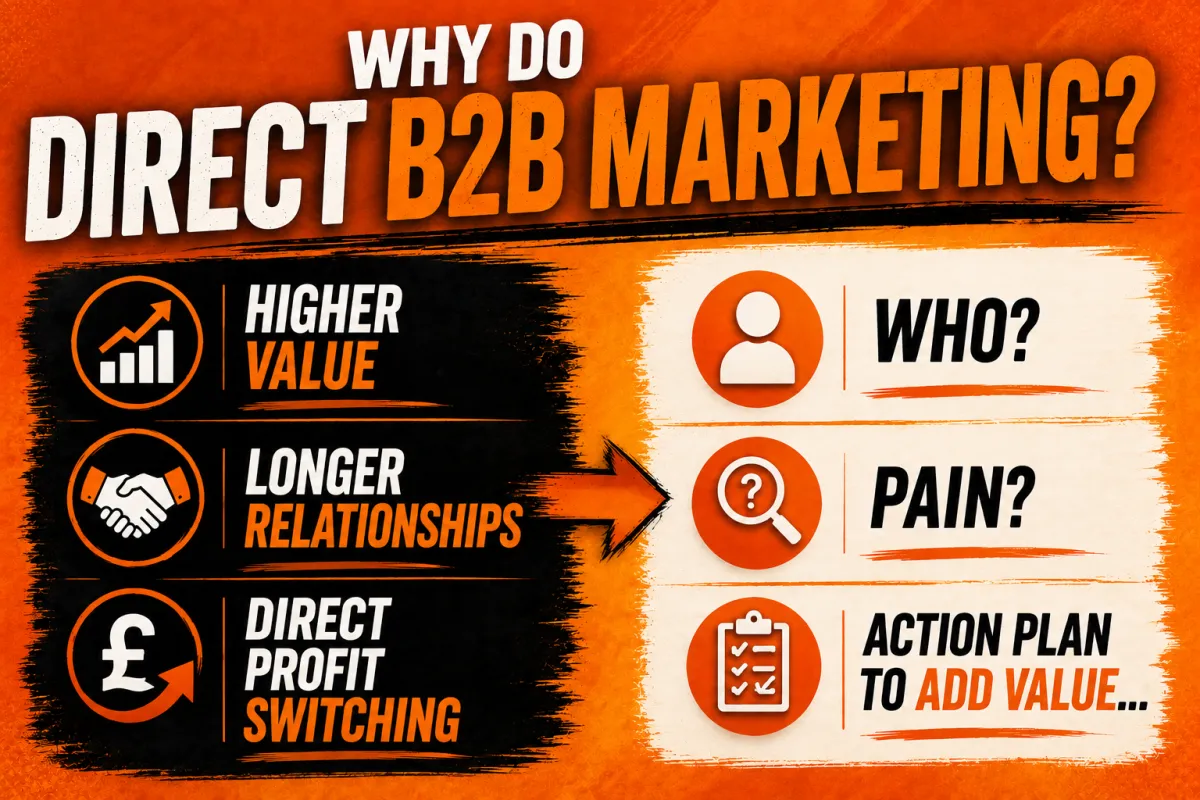
B2B marketing exists because bigger clients don't buy the way small clients do: more people are involved in the decision, and it takes longer to earn their trust. For a UK SME with no in-house marketing team, the fastest, lowest-cost way to start is not adverts or a rebrand. It's strategic partnerships, getting introduced by businesses who already have the trust of the client you want. Start by defining your ideal bigger client, listing five non-competing businesses who already reach them, and adding value to one of those relationships before you ask for anything.
Why Do B2B Marketing? What It Actually Means for an SME
B2B marketing is the process of building visibility, credibility and trust with a business's buying decision-makers before you or your sales team ever speaks to them. For an SME, it matters most when you're trying to move up-market, because larger clients don't respond to a single advert or a single cold call the way smaller ones sometimes do. Without marketing doing the groundwork first, sales conversations with bigger prospects tend to stall or go quiet.
Most SMEs already do a version of sales: quoting, following up, closing. Marketing is different. It's what happens before that, getting your business known, trusted and considered by the right people, so that by the time sales gets involved, you're not starting from zero.
Why Do Larger Clients Take So Long to Win?
Larger clients take longer because more people are involved in the decision, and they're doing more research before they ever talk to you. On deals of meaningful size, buying groups now average over 11 stakeholders, up from under 10 just a couple of years ago, and these deals commonly run four months or more for mid-market businesses before a contract is signed (Forrester/6sense, 2026).
That's very different from a typical SME sale, where one owner-manager can say yes on the spot. If your entire marketing and sales approach is built for that fast, single-decision-maker buyer, it simply won't reach, or convince, the wider group of people who need to sign off on a bigger contract.
There's a second factor: buyers now do most of their own research before contacting anyone. Industry data shows B2B buyers work through more than 13 pieces of content on average, with roughly two-thirds of the buying journey happening before a salesperson is even involved (Content Marketing Institute, 2026). If you're not visible and credible during that research phase, you're not being shortlisted, regardless of how good your sales pitch would have been.
Where Should an SME Start With B2B Marketing?
An SME chasing bigger clients should start with relationships, not adverts: specifically, building strategic partnerships with businesses who already have trust with the exact people you want to reach. This avoids the two most common first-time mistakes: spending on paid ads before you have proof of what converts, or trying to build a content engine from a standing start with no audience.
Here's the practical order of operations:
Get specific on who "bigger client" means. Sector, size, and, critically, who is likely to sit on their buying committee (finance, ops, the owner, procurement).
List five non-competing businesses already trusted by that client. Their accountant, their industry association, a supplier solving a different problem for the same buyer.
Add value first, with no ask. Share something genuinely useful: an introduction, insight, or resource, before you ever ask for a referral or introduction back.
Build a simple, repeatable referral process. Most partnerships stall not because trust is missing, but because there's no clear, low-friction way to actually send a referral.
This is a slower start than running ads, but it's dramatically cheaper, and it puts you in front of decision-makers with borrowed credibility, instead of trying to build trust from a cold start.
How Do Strategic Partnerships Fit Into B2B Marketing?
Strategic partnerships are a form of B2B marketing because they generate visibility and trust with your ideal client through someone the client already believes, which is exactly what marketing is meant to achieve. Rather than buying attention through adverts, you're borrowing it through relationships.
Partnerships also don't have to sit at one level of intensity. They tend to move through stages, starting with simple introductions, then a proper referral process, then shared resources or joint content, right through to formal commercial partnerships with defined fees or revenue share. An SME just starting out shouldn't try to jump to a formal revenue-share partnership on day one; that trust has to be built in stages, the same way trust with the end client does.
The reason this matters for bigger clients specifically: a referral from a trusted accountant, industry body, or complementary supplier can skip straight past the "who even are you" research phase that a cold approach has to fight through.
What's the First Step This Week?
The first practical step is to write down five non-competing businesses that already have genuine trust with the exact type of bigger client you want, and reach out to one of them with something useful, not a pitch. No content plan, no ad budget, no rebrand required to start.
A simple way to structure it:
This week: Identify and prioritise 3–5 potential partners based on how much crosswork they'd get with your ideal client.
Next week: Research each one properly (their world, their clients, their challenges) and open the door with a genuinely personalised, warm outreach (not a generic pitch).
Week three: Have a proper discovery conversation. Learn what they need before you talk about what you want.
Ongoing: Stay visible and useful consistently, trust is built over months, not one meeting, then create a simple, clear referral pathway once trust exists.
That's the realistic starting point for B2B marketing when you're an SME with no marketing team and a genuine ambition to land bigger clients.
FAQs
Why do SMEs need B2B marketing if they already have sales?
Sales converts interest into a signed deal, but it can't create trust or awareness on its own, especially with bigger clients who research extensively and involve multiple decision-makers before ever speaking to a salesperson. Marketing does that groundwork first.
How long does it take to see results from B2B marketing?
For relationship-led approaches like strategic partnerships, expect a build-up of 2–6 months before referrals start flowing consistently. This mirrors typical mid-market B2B sales cycles, which commonly run four months or longer.
What's the cheapest way for an SME to start B2B marketing?
Strategic partnerships are typically the lowest-cost starting point, because they rely on relationship-building and value-add rather than advertising spend, and they give you access to a partner's existing trust with the client you want.
Do strategic partnerships work for any industry?
Yes, any business with an identifiable "ideal bigger client" can find non-competing businesses who already serve or influence that same client. The specific partners will differ by sector, but the process is the same.
About the author
Phil Ball is a UK-based business coach working with SME owners on marketing, sales, operations, finance and team growth (the MSOFT model), and runs sales and leadership training for corporate teams. This article draws on his work helping service-based SMEs build referral and partnership pipelines that convert into higher-value, longer-term clients.